

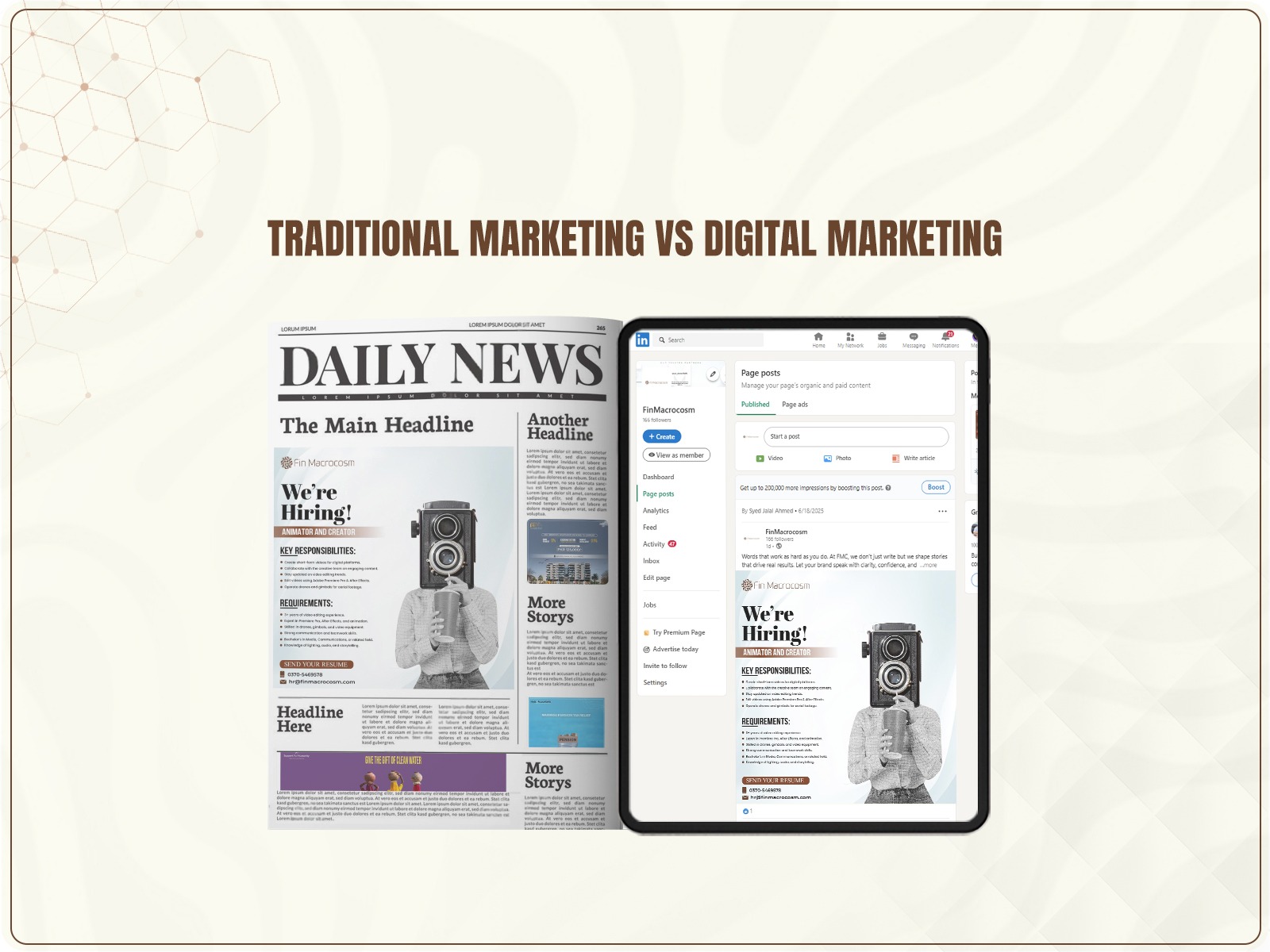
Digital Marketing vs Traditional Marketing: ROI Comparison 2026
Choosing the right marketing strategy for your business can feel overwhelming. Should you invest in digital channels or stick with traditional methods? At FinMacrocosm, we guide businesses through these daily decisions, helping them maximize their marketing investments.
Let’s break down both approaches and see which one delivers better returns for your business.
Understanding Traditional Marketing
Traditional marketing refers to all the promotional methods that existed before the internet became part of our everyday lives. These are the channels your parents and grandparents used to discover brands and products.
Traditional marketing includes:
- Television and radio commercials
- Print advertisements in newspapers and magazines
- Billboards advertising
- Brochures and flyers
- Trade shows and exhibitions
These methods have proven their worth over decades. Many established brands still rely on them to maintain visibility and reach certain demographics. Physical ads and radio jingles feel more real and easy to remember.
Understanding Digital Marketing
Digital marketing encompasses all promotional activities that happen online. It’s the world of screens, clicks, and instant connections. This is where modern consumers spend most of their time.
Digital marketing includes:
- Social media marketing and advertising
- Search engine optimization and paid search
- Email marketing campaigns
- Content marketing and blogging
- Video marketing on platforms like YouTube
- Influencer partnerships
- Online display advertising
The online world changes fast. Something that worked great last year might not work anymore. That’s why you need to keep up with what’s new.
Comparing the Investment Required
When we talk about ROI, we need to start with how much you spend. How much does each approach actually cost?
● Traditional Marketing Investment
Traditional marketing often requires spending a lot right away. To create a TV commercial, you need to hire people to film it, pay actors, and buy time on TV channels. Magazine or newspaper ads need professional designers, and you pay based on ad size. Billboards need both creation costs and ongoing fees for prime locations.
The costs add up quickly, and there’s little flexibility once you’ve committed. You pay for the entire campaign upfront, whether it succeeds or not.
● Digital Marketing Investment
Digital marketing offers much more flexibility with budgets. You can start small and scale up as you see results. Platforms allow you to set a spending limit and change it every day if needed.
Small businesses can compete with big companies because success depends more on smart ideas and good planning than on how much money you spend.
At FinMacrocosm, we help businesses of all sizes run digital campaigns that match their budget and still deliver meaningful results.
Measuring Success and Results
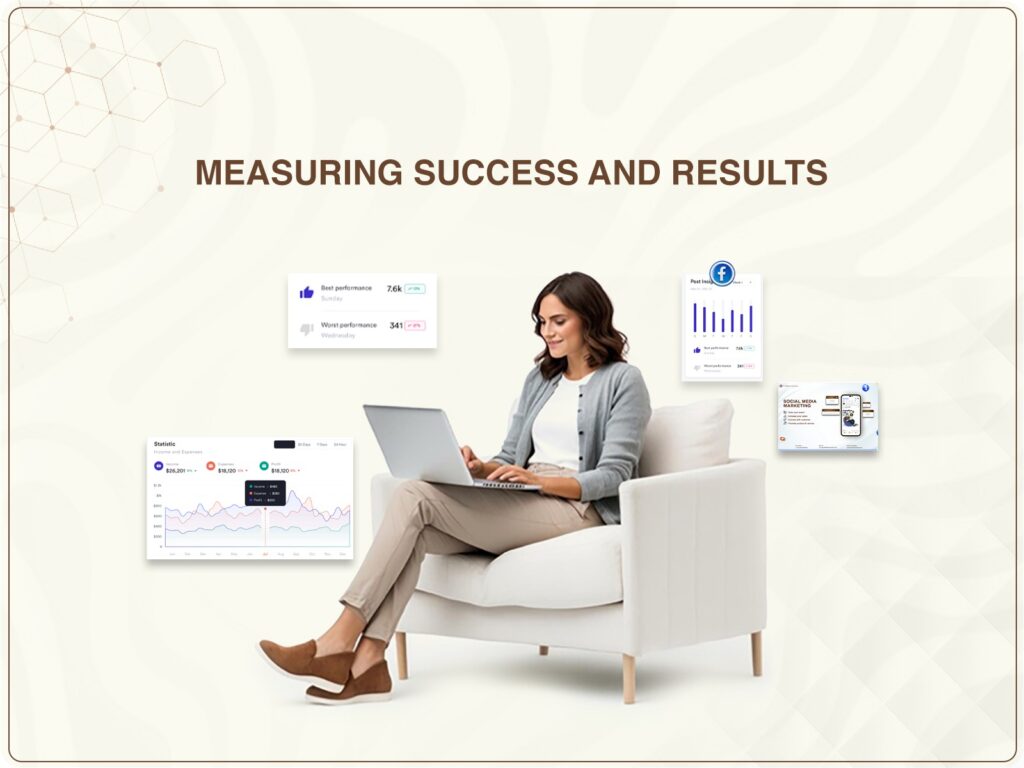
This is where the conversation gets really interesting. Understanding what you’re getting for your money makes all the difference.
● Tracking Traditional Marketing Performance
Traditional marketing presents significant measurement challenges. When someone sees your billboard and later visits your office, how do you connect those dots? You can’t always know for certain.
You might track general increases in sales or foot traffic during a campaign period, but attributing those results directly to specific advertisements remains difficult. Customer surveys help, but people don’t always remember where they first heard about you.
Because of this uncertainty, it becomes hard to calculate the exact ROI. You often rely on estimates and informed guesses instead of clear data.
● Tracking Digital Marketing Performance
Digital marketing is easy to measure. Every click, view, and conversion gets tracked. You know exactly how people interact with your content.
Analytics tools show you which campaigns drive sales, which social posts generate engagement, and which email subjects get opened. You can see the complete customer journey from first click to final purchase.
This clear data helps you make better decisions. Instead of guessing what works, you know for sure. You can focus on what brings results and stop spending money on things that don’t work.
Reaching the Right People
Getting your message in front of the right audience determines whether your marketing investment pays off.
● Traditional Marketing Audience Reach
Traditional methods broadcast your message broadly. A television commercial reaches everyone watching that program, regardless of whether they’re potential customers. A newspaper ad appears before every reader, even those who’ll never need your services.
This broad approach means you’re paying to reach many people who’ll never convert. It’s effective for building general brand awareness but less efficient for targeted customer acquisition.
Certain demographics still respond well to traditional channels. Older audiences often prefer print media and television. Local radio remains powerful in specific communities.
● Digital Marketing Audience Reach
Digital platforms let you target with precision. You can define your ideal customer by age, location, interests, behaviors, and countless other factors. Your ads appear only to the targeted audience.
This better targeting helps you get more value from your marketing budget, so every amount you spend works harder. You’re not wasting resources on irrelevant audiences. Instead, you’re investing in reaching people actively searching for solutions you provide.
FinMacrocosm helps clients identify and reach their perfect customers through strategic digital targeting, ensuring marketing budgets generate maximum impact.
Speed and Adaptability
Markets change quickly, and customer behavior can shift at any time. Your marketing needs to keep pace by adapting fast and updating strategies whenever new trends or opportunities arise.
● Traditional Marketing Flexibility
Traditional campaigns move slowly. Planning, creating, and launching a television commercial takes months. You can’t run a magazine ad instantly; it must be scheduled well ahead. Once your billboard goes up, changing it means starting from scratch.
If market conditions shift or you spot a mistake, you’re locked in until the campaign ends. This rigidity can be costly when circumstances demand quick adjustments.
● Digital Marketing Flexibility
Digital campaigns launch quickly and adjust instantly. You can create and publish social media content the same day. Notice something isn’t working? Change it immediately. See a new trend? Use it to your benefit right away.
This flexibility helps businesses stay relevant and responsive. You can test different messages, images, and strategies, keeping what works and discarding what doesn’t. This continuous optimization improves results over time.
Building Customer Connections
Nowadays, the audience expects more than one-way advertising. They want relationships with brands.
● Traditional Marketing Engagement
Traditional marketing primarily talks at audiences rather than with them. You create your message and broadcast it. Customers receive it passively. There’s a limited opportunity for immediate interaction or feedback.
This one-directional communication builds awareness but doesn’t foster the deeper connections that create loyal customers.
● Digital Marketing Engagement
Digital channels create conversations. Customers can comment, ask questions, share opinions, and interact with your brand directly. You can respond in real-time, solving problems and building relationships.
Social media turns your customers into an engaged community. Email marketing personalizes messages based on individual behaviors and preferences. By engaging your customers, you earn their trust and long-lasting loyalty.
Long-Term Value Creation
Smart marketing creates value that extends beyond immediate sales.
● Traditional Marketing Longevity
Traditional campaigns have fixed lifespans. Your television commercial stops running when your contract ends. Your print ad disappears when readers discard the magazine. Without continuous investment, your presence vanishes.
Each new campaign starts from zero, requiring fresh investment to maintain visibility.
● Digital Marketing Longevity
Digital content builds over time. A well-written blog post attracts visitors for years. Your social media following grows over time. Email subscribers become your own audience, you can reach repeatedly without additional advertising costs.
Quality content keeps working for you. What you create today keeps bringing in customers months or even years later. “This means your marketing keeps building on itself and is cost-effective over time.
The ROI Reality in 2026
Based on measurability, targeting precision, cost efficiency, and long-term value creation, digital marketing consistently delivers superior ROI for most businesses today.
Digital marketing costs less to start, provides exact performance data, reaches precisely targeted audiences, adapts instantly to market changes, and builds lasting assets. These advantages add up to better returns on every amount invested.
However, context matters. Some businesses still benefit from traditional methods. Local service providers might find community newspapers effective. Premium brands sometimes need the trust that certain print publications provide. The right answer depends on your specific audience and goals.
The FinMacrocosm Approach
At FinMacrocosm, we believe in data-driven marketing decisions. We help businesses understand where their customers actually spend time and attention, then build strategies around those insights.
For most companies in 2026, this means prioritizing digital channels. The measurement capabilities alone justify the focus. When you can track every amount you spend and see exactly what it produces, you can optimize continuously and maximize returns. We recommend starting with strong digital foundations: a well-optimized website, strategic social media presence, and targeted advertising campaigns.
Traditional marketing isn’t wrong, but it’s no longer the default choice. Use it strategically where it makes sense, not because it’s familiar or because competitors do it.
Conclusion: Moving Forward With Confidence
The world of marketing keeps changing, but one rule stays the same: put your money where you can see what’s working and reach the right customers effectively.
Digital marketing does exactly that. You can track performance accurately and target precisely, giving you clear ROI advantages. Your marketing budget deserves to work as hard as you do. In 2026, that means going digital first.
Ready to make your marketing budget work smarter? FinMacrocosm can help you build a strategy that delivers real, measurable results. Let’s talk.

Leave a Reply